Most home inspection reports arrive within 24 to 48 hours of the inspection. Some inspectors deliver the same day, and a big, old or complicated house can take longer.
That answer leaves out the part that matters to the deal. While the buyer waits for the report, a clock in their contract keeps running.
The clock nobody mentions
Almost every purchase contract gives the buyer a fixed window to inspect the house and decide what to do about it. In Texas it’s the option period, and the number of days is a blank the two sides fill in, often somewhere between 5 and 10. Florida’s standard as-is contract gives 15 days unless the contract says otherwise. California’s standard purchase agreement gives 17. Your state’s form has its own number, and the agents can change it.
That window starts when the contract is signed, not when the report shows up. Inside it, the buyer has to book the inspection, wait for the report, get quotes from contractors, talk it through with their agent and send a repair request. Every day the report spends on my desk is a day they don’t have for the rest.
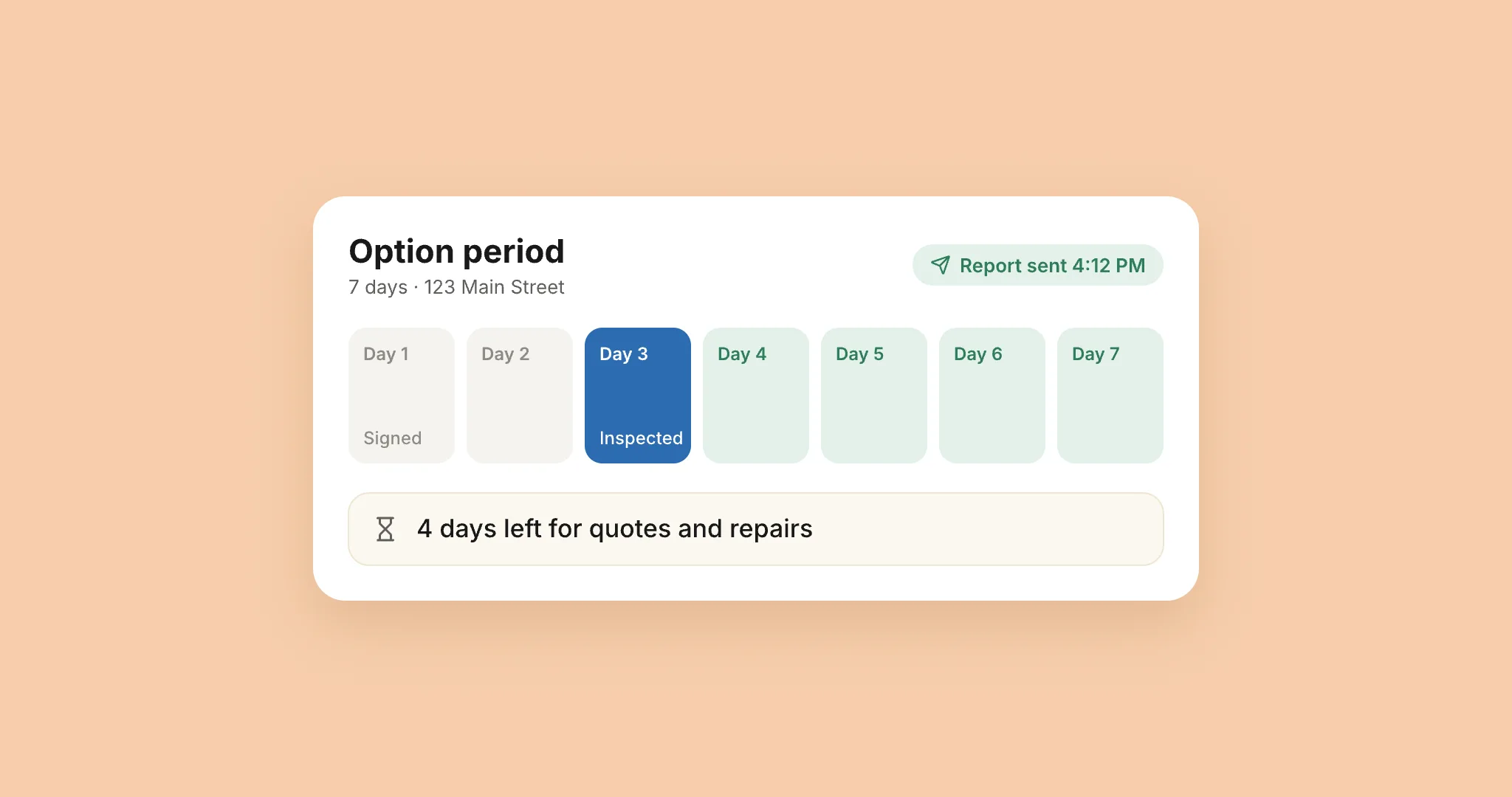
Do the math on a 7-day option period. The inspection happens on day three, and the report lands on day five. That leaves the buyer two days to call a roofer, hear back and make up their mind.
What a late report costs
A late report puts everybody behind.
The buyer decides in a hurry. They ask for a credit instead of a repair because there’s no time to get a quote, or they let something go that they’d have pushed back on with three more days. The agent spends the morning texting the inspector and the afternoon explaining to the client why they still don’t have anything to read. And the repair request goes out thin, put together on a phone between other appointments.
Agents notice. They remember whose report showed up before the client called asking about it, and that’s who they send the next buyer to.
Why reports take so long
The inspection itself takes two to three hours on an average house. The report is a second shift.
Most of us write it that evening. You pull a few hundred photos off the phone, sort them by system and throw out the blurry ones. Then you type up every finding: what it is, where it is, why it matters and what to do about it. Then the summary, the formatting, and one more read for the sentence you wrote half asleep. On a house with a lot going on, that’s easily another couple of hours. Do two inspections in a day and the first report goes out the next morning.
Very little of that evening is inspecting. Most of it is turning what you already saw into something a client can read.
How inspectors get it out the same day
The inspectors who deliver the same day aren’t faster on the roof. They just don’t save the writing for later.
They write as they go. A finding written in the attic, while you’re still looking at the problem, takes a minute. The same finding written at nine at night from a photo takes five, because first you have to remember what you were looking at.
They lean on a template. Sections, standard wording and severity levels get set up once, so on site you’re only writing what’s different about this house.
They review between rooms. On the way from the kitchen to the basement, they read back what they’ve got for the kitchen, so by the last room the report has already been checked one room at a time.
And they send it from the driveway. One last look at the summary, the client and the agent on the email, and it’s gone before they pull away.
How AEYES does it
That’s the workflow I built AEYES around.
You take a photo, and AEYES drafts the finding from it: what it is, the likely cause and what to recommend, using your own narratives where you have them. You approve it or change it on site, between rooms, while you’re still standing there. Nothing goes into the report until you approve it, and when you walk out, the report is already built from what you approved. You send it from the driveway.
Customers tell us an inspection drops from 3.5 to 4 hours to 1.5 to 2.5 hours, write-up included (calls, Oct 2026; not a controlled study).
To see the whole flow, read How it works, or open the sample report the way your client would.