
Where the Hours Actually Go
The inspection takes three hours. The work wrapped around it takes another three. Here is where they disappear.
Travis Page
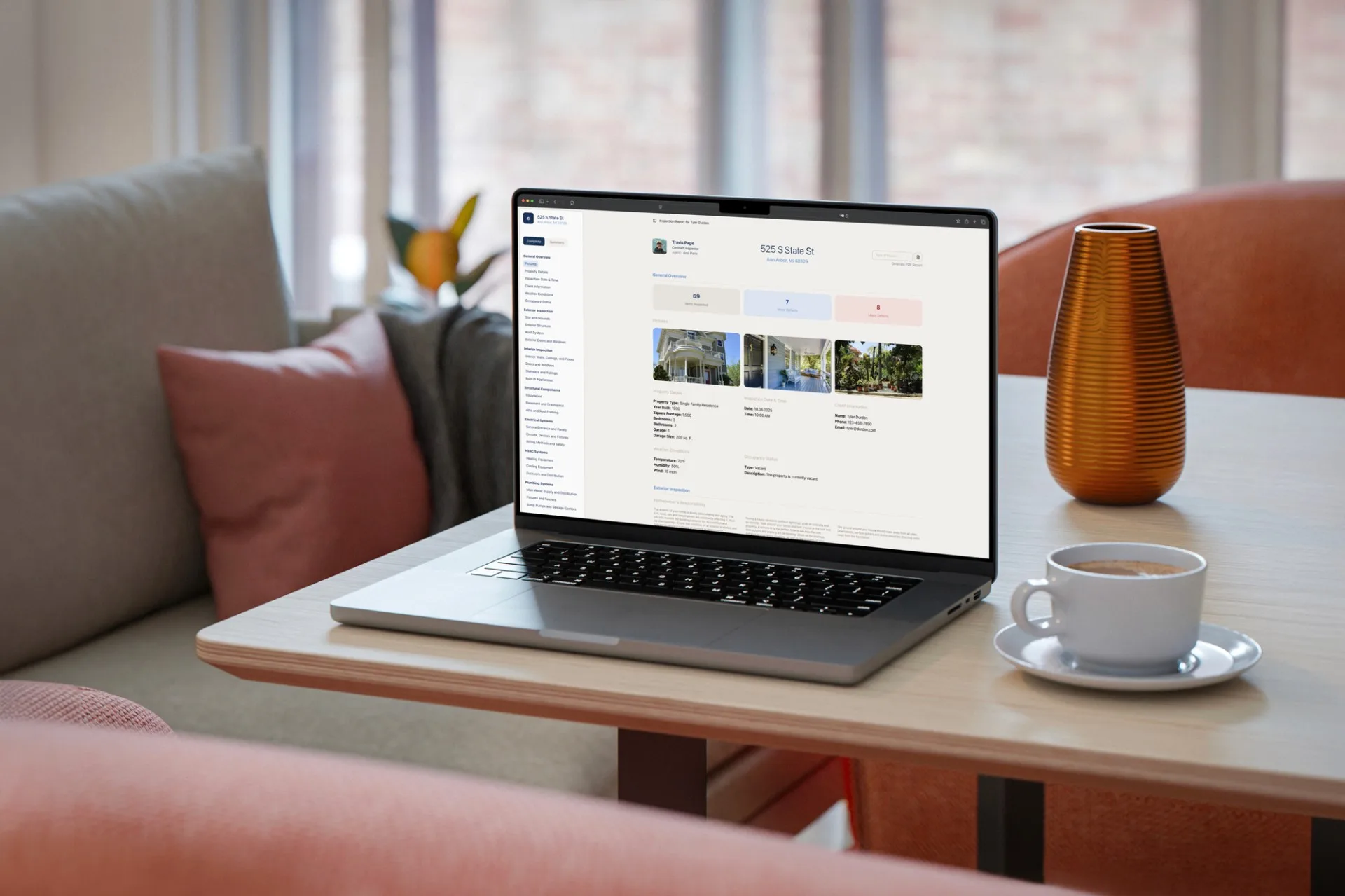
You close the panel cover at two in the afternoon. There is insulation in your collar, four hundred photos on your phone, and a clear picture in your head of what this house is going to cost somebody. The skilled part of the day is behind you.
Then you sit down at the kitchen table at eight in the evening and start the second shift.
The part nobody quotes for
Ask an inspector how long a job takes and you will hear the field time. Three hours, maybe four for a big older place. That number is honest about the inspection and completely quiet about everything wrapped around it.
Sorting photos. Matching a picture of a cracked drain line to the right bathroom, three days after you stood in it. Writing the same paragraph about missing GFCI protection that you have written a few hundred times, in slightly different words each time. Answering the agent who wants to know when the report will land. Answering her again. Moving next Tuesday because a seller rescheduled. Sending the invoice. Filing all of it somewhere you can actually find it in two years, when someone asks.
None of that is inspecting. All of it has to happen.
Why it compounds
Most of this work spreads across systems that do not talk to each other. Scheduling lives in one place, photos in another, the report somewhere else, and client communication sits in your inbox. Every handoff costs a retype. You will enter the same property address four times before the client reads a single word you wrote.
Volume makes it worse in a way that catches people out. Doubling your inspections does not double the paperwork, it does something worse, because the tracking piles up on top of the typing. Which report is waiting on you. Which client already got their summary. Which agent is owed a call back. Inspectors who grow past a few jobs a week tend to hit that wall long before they hit any limit on their skill.
What the day should look like
The fix is not learning to type faster. It is having less to move by hand.
A photograph should already know which room it came from, because you took it while standing in that room. An observation you spoke out loud in the crawlspace should already be attached to the right system. The paragraph you have written three hundred times should arrive drafted, waiting for you to correct it rather than compose it from nothing at nine at night.
Then the report goes out after you have read every line, because your name is the one on it.
That is the difference between software that stores your work and software that carries some of it.
Why we built it this way
AEYES came out of doing the job. Travis spent years on ladders and in crawlspaces, and it was the kitchen table at nine in the evening that made him want to build something different. Not because reports are hard to write. Because writing the four hundredth one is not the thing a client is paying for.
Inspectors get hired for judgment. For noticing that a stain does not match the story the seller told, for knowing which cracks matter and which ones are just a house getting older. Every hour spent moving information around is an hour not spent on that, and it is the easiest hour in this business to win back.
Inspectors using AEYES generate their reports in minutes and move roughly three times faster through the work surrounding an inspection. The inspection itself still takes as long as it takes. It should.
Built for the field. Ready for your next inspection.
AEYES helps home inspectors move from photo capture to a client-ready report with less repetitive work.
Sign up
